



Georgia's Wildfire Season Is Here: What Homeowners Need to Know in 2026

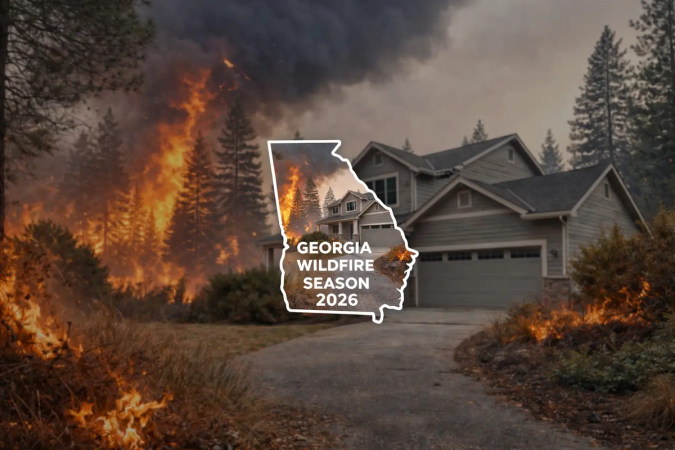
Every year from February through May, Georgia enters its official wildfire season — a stretch of dry, windy weather that turns brush, dead vegetation, and overgrown yards into fuel. Most years, Georgia sees roughly 3,500 wildfires, with debris burning responsible for more than half of them.
But 2026 isn't shaping up to be a typical year. Fire danger alerts have already been issued across North and Central Georgia, burn bans are in effect in multiple counties, and national forecasters are projecting above-normal wildfire risk for the state through at least May. Meanwhile, tragic house fires in recent weeks have reminded us just how quickly fire can devastate a home and a family.
Whether you live in a wooded neighborhood in North Georgia or a suburban community near Atlanta, this is the time to take wildfire preparedness seriously. Here's what's happening, why it matters, and what you can do to protect your home.
Georgia's 2026 Fire Season Has Already Started Strong
According to the Georgia Emergency Management and Homeland Security Agency (GEMA), Georgia's wildfire season runs during the dry and windy months of February through May. This year, the season has wasted no time making its presence felt.
The National Weather Service issued high fire danger statements for North and Central Georgia on February 8, 12, and 14 — each time warning that relative humidity was dropping to 25% or less for four or more consecutive hours. When humidity drops that low, dry fuels like grass, pine needles, and dead leaves can ignite rapidly and fires can spread before anyone has time to react.
The impact has been immediate. In Lee County, the Sheriff's Office reported a "devastating number of fires" on February 13 and 14, urging residents to avoid lighting any fires. In Cook County, firefighters were overwhelmed by out-of-control burns, and Georgia Forestry stopped issuing burn permits in the region. Officials said several homes were nearly lost. In Atkinson County, nine separate fires ignited along a single road after sparks from a grill being towed on a trailer caught dry vegetation — burning an estimated 50 to 60 acres.
Multiple counties across South Georgia have since enacted burn bans or burning restrictions, and fire crews in some areas have been working around the clock to contain wildfires.
Why 2026 Is Shaping Up to Be Worse Than Usual
It's not just local conditions raising alarms. National fire forecasters have singled out Georgia as a state to watch this year.
The National Interagency Fire Center (NIFC) projects above-normal wildfire risk for Georgia, Florida, Texas, and the Carolinas through at least May 2026. The driving factor is La Niña, a climate pattern that's pushing storm tracks away from the Southeast and leaving Georgia warmer and drier than normal heading into spring.
The numbers tell the story: drought across the southern Appalachians and Piedmont has been progressively worsening, with rainfall over the past six months running 5 to 15 inches below average in parts of the state. Swamps and waterways in lower elevations are unusually dry for this time of year. As the national outlook notes, human-caused wildfires have already been increasing due to drought and increased debris burning — and the addition of warmer temperatures and lightning ignitions could make for a very busy few months across Georgia.
According to AccuWeather's 2026 wildfire outlook, wildfire season is ramping up early across the country, with over 69% of the continental U.S. under drought conditions as of January 2026. Georgia and the broader Southeast face elevated risk through at least the end of spring.
How to Protect Your Home During Wildfire Season
You don't have to live in the mountains or deep woods to be at risk. Wildfires in Georgia regularly threaten suburban neighborhoods, especially when dry conditions and wind combine with overgrown yards and cluttered gutters. The good news is that a few practical steps can significantly reduce your risk.
GEMA recommends the following steps to prepare your property:
- Create a defensible space. Maintain a 30- to 100-foot safety zone around your home by keeping flammable vegetation to a minimum. Clear combustible materials within 20 feet of any structure.
- Clean your gutters and roof. Leaves, pine needles, and other debris in gutters and on rooftops are easy fuel for embers carried by the wind.
- Trim trees and vegetation. Cut back branches that overhang your home and prune large tree branches within 15 feet from the ground. Thin out space between tree crowns so fire can't jump from tree to tree.
- Clear under decks and porches. Remove leaves, wood scraps, and other debris that can accumulate underneath raised structures.
- Use fire-resistant materials. If you're building, renovating, or making repairs, choose fire-resistant roofing, siding, and decking materials where possible.
- Install spark arrestors in chimneys and stovepipes to prevent embers from escaping and landing on your roof or yard.
- Follow local burn regulations. If your county has burn restrictions or a burn ban in effect, respect them. A single spark can set off a wildfire in current conditions.
- Have an evacuation plan. GEMA recommends planning multiple escape routes from your home — both by car and on foot — and preparing a Ready Kit with at least three days of essentials.
You can monitor daily fire danger conditions for your county through the Georgia Forestry Commission's fire weather page, and find more home protection resources at Firewise USA. Fire prevention is a year-round responsibility — as we covered in our earlier post on how to prevent a Christmas tree fire, small habits can make a big difference when it comes to keeping your home safe.
What to Do If Fire or Smoke Damages Your Home
Even if flames never directly touch your home, a nearby wildfire or house fire can cause serious damage. Smoke and soot are insidious — they penetrate walls, ceilings, insulation, HVAC systems, and soft furnishings. Left unaddressed, smoke residue causes lingering odors, discoloration, and corrosion that worsens over time. And when firefighting efforts involve water — whether from hoses or sprinkler systems — the resulting moisture can trigger mold growth within as little as 48 hours.
If your home has been affected by fire or smoke, here's what to do:
- Make sure everyone is safe. Do not re-enter the home until fire officials have cleared it. Follow all instructions from first responders.
- Contact your insurance company. Report the damage as soon as possible and begin the claims process. Ask your adjuster about coverage for professional restoration.
- Document everything. Take photos and video of all visible damage before any cleanup begins. This documentation is critical for insurance claims.
- Call a professional restoration company. DIY cleanup after fire and smoke damage often makes things worse and can void insurance claims. Professional restoration includes proper soot removal, smoke odor elimination, structural assessment, water extraction, and mold prevention — all handled by certified technicians who know how to work with your insurance.
If you're wondering what the restoration process looks like and how long it takes, our recent blog post on the timeline for smoke damage home remediation walks through each step from initial assessment to final walkthrough.
In cases where fire causes significant structural damage, construction and rebuild services may be needed to bring your home back to its pre-loss condition. And because water damage from firefighting efforts is common, water damage restoration often goes hand-in-hand with fire recovery — addressing moisture, preventing mold, and drying out the property before repairs begin.
Serenity Restoration Is Here When You Need Us
At Serenity Restoration, we understand that fire damage is one of the most stressful things a homeowner can face. That's why our team is available 24 hours a day, 7 days a week to respond when it matters most. With over 50 years of combined experience and a team of certified experts, we handle every phase of the recovery process:
- Fire and smoke damage cleanup — soot removal, smoke odor elimination, and content cleaning
- Water damage restoration — extraction, drying, and moisture control after firefighting efforts
- Mold removal and remediation — preventing and treating mold growth caused by water and humidity
- Construction and rebuild — structural repairs and full restoration to pre-loss condition
From the first call to the final walkthrough, we lead with clear communication, act with purpose, and make the restoration process as simple and transparent as possible — so you can focus on getting back to normal.
Don't wait until fire season catches you off guard.
Call Serenity Restoration at (678) 648-1294 anytime, day or night.
The Bottom Line
Georgia's wildfire season is not something to wait out — it's something to prepare for. The conditions in 2026 are already more dangerous than a typical year, and we're only in February. A little preparation now can prevent devastating losses later.
Take time this week to clear debris from your yard, clean your gutters, check your smoke detectors, and make sure your family has a plan. And if fire or smoke ever does affect your home, know that Serenity Restoration is just one call away.
Sources & Resources
- GEMA — Wildfires
- NWS — High Fire Danger Alert, Feb 14 (Cobb Courier)
- Lee County Reports Unusual Number of Fires (Now Georgia)
- Multiple South Georgia Counties Urge Caution (WALB)
- Burn Bans in South Georgia (WTXL)
- 2026 Wildfire Outlook — NIFC Data (USFireDept)
- Wildfire Season Ramping Up Early (AccuWeather)
- Georgia Forestry Commission — Fire Weather
- Firewise USA