



Sewage Backup Water Damage: What Atlanta Homeowners Need to Know Before It Gets Worse

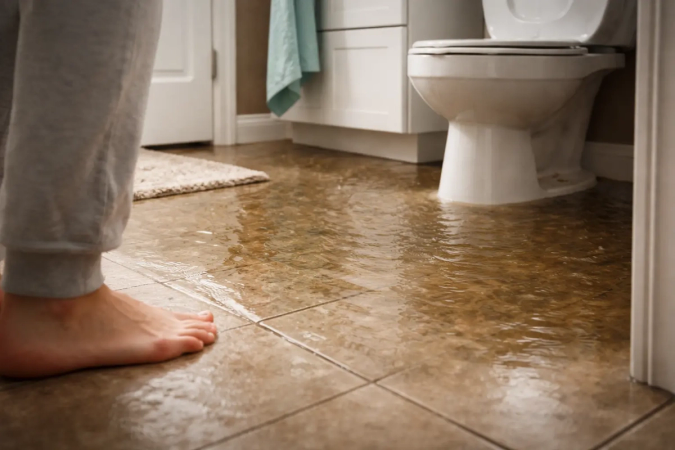
You walk into your basement or bathroom and the smell hits you before you even see it. Standing water. Dark, contaminated, and rising from the drain. Sewage backup is one of the fastest-moving water damage events a homeowner can face — and the window to prevent lasting structural damage is measured in hours, not days.
This isn't just a plumbing problem. Once sewage water enters your home, it saturates floors, walls, and substructures the same way any flooding event does — except the contamination classification changes how every step of the water damage restoration process works. Here's what's driving it in the Atlanta area right now, what it does to your home, and how to stop the damage from compounding.
Why Sewage Backs Up — and Why Spring Is the Worst Season in Atlanta
Sewage backup happens when wastewater can't exit your home through the main sewer line and reverses back through the lowest drain point — typically a floor drain, ground-floor toilet, or basement tub.
Two causes account for the vast majority of cases, and they require different fixes.
Blockages in your own line are usually caused by tree root intrusion (the most common culprit in older metro Atlanta neighborhoods), grease and debris accumulation, or a collapsed pipe section. These are isolated to your property and a plumber can clear or repair them.
Municipal sewer system overload is the one that spikes every spring — and it's driven by Atlanta's aging infrastructure. When heavy rain saturates the ground, water infiltrates old sewer pipes through cracks and joints, overwhelming system capacity. In older parts of Atlanta and DeKalb County, combined sewer pipes carry both stormwater and sanitary sewage through a single line. When those pipes are overwhelmed, pressure reverses into homes.
Atlanta has been under federal consent decrees since the late 1990s requiring the city to address chronic sewer overflows, and construction is still underway on underground storage vaults designed to capture overflow in neighborhoods that have dealt with sewage flooding for decades. The infrastructure is improving — but spring rainstorms continue to overwhelm the system.
If your home is in an older neighborhood in Atlanta, Tucker, Decatur, or the surrounding DeKalb and Fulton County area, and you've had a backup following heavy rain, a municipal overflow event is a likely factor.
What Sewage Backup Actually Does to Your Home
The water damage picture from a sewage backup follows the same pattern as any other basement or floor-level flooding — with one key difference. Because sewage water is contaminated, standard water damage restoration approaches don't apply to materials it has saturated. That changes the scope of work significantly.
Flooring takes the first hit. Hardwood buckles and swells within hours of exposure. Laminate separates at the joints. Tile itself survives, but the mortar bed and any organic material underneath may not. Carpet and pad are non-salvageable after sewage contact and must be removed entirely.
Subfloor damage develops fast. Plywood and OSB subfloor absorb contaminated water quickly. Depending on exposure time, subfloor replacement may be required even when the surface flooring looks like the only casualty. This is one of the most commonly underestimated damage items in sewage backup claims.
Drywall wicks moisture upward. Sewage water that reaches the base of a wall travels upward through drywall by capillary action. Depending on how long it sat, damage may extend significantly higher than the visible waterline. Any drywall that absorbed contaminated water requires removal — surface cleaning isn't sufficient.
Mold begins developing within 24 to 48 hours. Once organic building materials are wet, the clock is running. In Georgia's humidity, mold can begin colonizing wet surfaces within 24 to 48 hours. A sewage backup that sits overnight is already a compound problem — water damage and an active mold risk developing simultaneously inside your walls and subfloor.
This is why response time matters so much. The difference between a few hours and overnight is often the difference between subfloor replacement and subfloor salvage.
What Not to Do
A few mistakes homeowners commonly make in the first hour significantly expand the damage:
Don't run any water. Every flush, faucet, or appliance that sends water down a drain adds volume to an already overwhelmed line and drives more sewage further into your home. Stop all water use immediately.
Don't run your HVAC system. Your system circulates air throughout the entire house. Running it while sewage water is present spreads contamination — and moisture — to rooms that were never directly affected.
Don't attempt DIY cleanup. The damage hidden in subfloors, wall cavities, and insulation isn't visible from the surface. Consumer wet-vacs and household disinfectants aren't rated for this type of water damage, and surface cleaning of saturated drywall does nothing for the moisture content inside it.
Don't delay documentation. Before anything is moved or removed, photograph and video everything thoroughly. Your insurance claim depends on this evidence.
The Right Order of Operations
1. Get everyone out of the affected area and stop all water use in the home.
2. Ventilate if safe to do so. Open windows and exterior doors to begin reducing moisture and odor. Do not turn on the HVAC.
3. Call a plumber and a water damage restoration company at the same time. These are two separate problems requiring two separate professionals. The plumber clears the source. The restoration team addresses the water damage. Clearing the line without remediating the water damage leaves saturated materials actively deteriorating — and the mold clock still running.
4. Document everything before any cleanup begins. Photos and video of standing water, affected materials, and all impacted rooms.
5. Contact your insurer. Report the event promptly. Understanding whether your policy covers sewage backup before cleanup begins can prevent a denied claim — standard homeowners policies in Georgia frequently exclude sewer and drain backup unless you've added a specific endorsement.
What Professional Sewage Backup Restoration Involves
Professional water damage restoration for sewage backup follows the same core process as other flooding events, adapted for the contamination classification of the water involved.
The restoration team extracts standing water and establishes containment to prevent the affected area from spreading contamination to clean spaces. Saturated porous materials — carpet, pad, drywall, insulation, and often subflooring — are removed and handled under our biohazard cleanup protocols. Hard surfaces are cleaned and treated with EPA-registered products. Industrial air movers and dehumidifiers run continuously to drive the structure to target moisture levels, and HEPA air filtration captures airborne particulates during the process.
Moisture readings are taken throughout to verify the structure is genuinely dry — not just dry on the surface. Only after the structure passes drying verification does reconstruction begin, replacing the drywall, flooring, and insulation that were removed.
The entire process is documented at each stage, which matters both for your own health assurance and for the adjuster reviewing your claim.
The Insurance Question
Standard homeowners insurance policies in Georgia typically exclude sewage backup — this surprises most homeowners, because water damage from a burst pipe is usually covered, but sewer and drain backup is a standard exclusion.
Sewer backup coverage is available as an endorsement that can be added to most policies for relatively little — often $50–$150 per year. If you live in an older neighborhood, have a basement, or are in metro Atlanta's combined sewer service area, this endorsement is worth having.
If you already have the coverage, the process is similar to other water damage claims: document thoroughly before anything is moved, notify your insurer promptly, and work with a restoration company that provides detailed scope-of-work and material removal documentation. For a full breakdown of how Georgia homeowners insurance handles water damage events, see our guide to what homeowners insurance covers for water damage
Reducing Your Risk Going Forward
You can't control the municipal sewer system during a heavy spring rainstorm, but a few measures meaningfully reduce your exposure:
Install a backwater valve. A one-way valve on your main sewer line allows waste to flow out but prevents it from reversing in. It's one of the most cost-effective protections for homes in older Atlanta-area neighborhoods, and may be eligible for a rebate through your city or county.
Have your sewer line camera-inspected. Tree root intrusion is the leading cause of residential sewer blockages in Georgia. Roots can infiltrate pipe joints for years before causing a backup. A periodic camera inspection catches the problem while it's still a routine clearing.
Know where your cleanout is. The sewer cleanout is a capped pipe near your foundation that gives a plumber direct access to the main line. Find it before you need it at 11pm during a rainstorm.
Serenity Restoration: 24/7 Water Damage Response Across Metro Atlanta
Sewage backup water damage doesn't wait for business hours. Serenity Restoration responds 24 hours a day to water damage emergencies throughout Tucker, Atlanta, Duluth, Decatur, Lawrenceville, and surrounding communities.
We handle the complete restoration scope: water extraction, containment, material removal, structural drying, and full reconstruction. We work directly with your insurance company and provide the documentation adjusters require.