



Black Mold in Georgia Homes: What It Is, What It Isn't, and When to Call a Pro

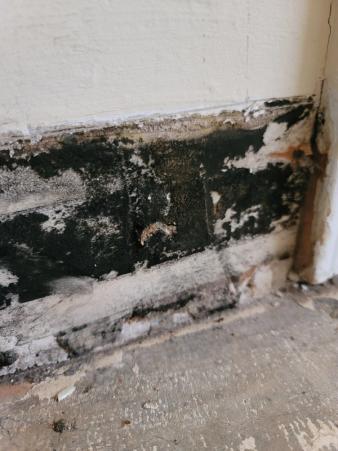
Few words in home ownership carry more alarm than "black mold." The phrase triggers images of a house condemned, a family sick, a repair bill with too many zeros. Some of that fear is warranted. A lot of it isn't — and the gap between what's true and what's myth leads Georgia homeowners to either panic unnecessarily or, more dangerously, underreact to a problem that genuinely needs professional attention.
This post is a straightforward guide to what black mold actually is, what the science says about its health effects, how Georgia's climate makes it a particular concern, and how to know when you're dealing with something you can handle versus something you should not touch.
What "Black Mold" Actually Means
The term "black mold" is commonly used to refer to Stachybotrys chartarum, a greenish-black fungus that grows on materials high in cellulose — drywall, wood, paper, and insulation. It's the mold that tends to appear slimy or wet-looking, often in areas with chronic moisture rather than a single water event.
Here's the first important nuance: not every dark-colored mold is Stachybotrys. Many common household molds — Cladosporium, Aspergillus, Penicillium — can appear black or very dark and are far more prevalent than Stachybotrys. You cannot reliably identify mold species by color or appearance alone. The only way to confirm what type of mold you're dealing with is laboratory testing of a physical sample.
This matters because the fear around "black mold" is specifically tied to Stachybotrys and its production of mycotoxins — toxic compounds that can cause health effects. Other dark molds may cause allergic reactions and should still be remediated, but they don't carry the same toxicological profile.
| Stachybotrys chartarum (black mold) | Cladosporium | Aspergillus | Penicillium | |
| Appearance | Dark green/black, slimy or wet-looking | Dark green, black, or brown, powdery | Green, yellow, or black, varies widely | Blue-green, powdery |
| Common locations | Behind walls, under floors, chronic moisture areas | Bathroom tile, HVAC ducts, fabrics | Basements, HVAC systems, food | Basements, carpet, insulation |
| Requires sustained moisture? | Yes — needs weeks of persistent dampness | No — grows in moderate humidity | No | No |
| Produces mycotoxins? | Yes | Rarely | Some species | Some species |
| DIY-cleanable (small hard surface)? | Professional recommended | Possibly | Possibly | Possibly |
What Black Mold Does — and Doesn't — Do to Your Health
The health claims around black mold range from accurate to wildly overstated, and it's worth separating the two clearly.
What the evidence supports:
According to Cleveland Clinic, black mold (Stachybotrys chartarum) can cause your immune system to activate and produce allergy-like symptoms, and can cause or worsen asthma. Common symptoms of exposure include:
- Nasal congestion and runny nose
- Coughing and sneezing
- Itchy, watery, or red eyes
- Skin irritation
- Worsening of asthma symptoms in those who already have the condition
People most at risk are children, the elderly, and anyone with a compromised immune system or existing respiratory condition. For these groups, mold exposure warrants prompt attention and medical guidance.
What the evidence does not support:
Cleveland Clinic is direct on this: there is no scientific evidence that black mold exposure causes memory loss, nosebleeds, body aches, mood disorders, or the constellation of symptoms sometimes called "toxic mold syndrome." These claims proliferated in the late 1990s and early 2000s and have not been substantiated by peer-reviewed research.
The CDC similarly notes that while mold exposure can cause respiratory symptoms and worsen asthma, it does not recommend routine mold testing of homes and cautions against overstating the health risks beyond what evidence supports.
This doesn't mean black mold is harmless — it means the actual documented risks are worth taking seriously without layering on unfounded fear. A home with significant Stachybotrys growth has a real problem that needs professional remediation. It does not necessarily mean the occupants have been permanently harmed.
Why Georgia Homes Are Particularly Vulnerable
If you live in the Atlanta metro — Tucker, Decatur, Norcross, Alpharetta, or surrounding communities — your home faces mold pressure that homeowners in drier climates simply don't deal with.
Georgia's humid subtropical climate means Atlanta averages above 70% relative humidity from April through November. The CDC recommends keeping indoor humidity below 50% to prevent mold growth. That gap — between what's outside and what's safe inside — is what your air conditioning system is fighting every summer day.
Stachybotrys in particular needs sustained moisture to grow. It doesn't appear after a brief leak that dries quickly. It appears when moisture problems are chronic: a slow pipe drip behind a wall, a basement that seeps after every rain, an HVAC condensate drain that backs up repeatedly, or a crawl space without proper vapor barrier and ventilation. Georgia's summer heat and humidity create the exact sustained conditions that feed it.
The areas most commonly affected in Georgia homes:
- Crawl spaces — unencapsulated crawl spaces in Georgia are essentially humidity traps. Ground moisture evaporates upward, condenses on floor joists and subfloor, and creates the sustained wet conditions Stachybotrys requires
- Attics — poor ventilation combined with summer heat and any roof leak creates a petri dish. Our post on attic mold removal in Georgia — causes, costs, and how to fix it covers this in detail
- Basements — Georgia basements that take on water during heavy rain are prime candidates, especially if they stay damp for days after a storm
- Behind walls near plumbing — a slow leak under a bathroom or kitchen sink, or a pinhole leak in supply lines inside a wall, can feed mold growth for months before it becomes visible
How to Tell If You Actually Have Black Mold
Since you can't identify mold species by sight, what you're really doing when you inspect your home is looking for evidence of a moisture problem significant enough to support sustained mold growth — and for mold colonies that warrant professional assessment.
Signs that warrant a closer look:
- A persistent musty, earthy odor in a specific room or area, especially in basements, crawl spaces, or rooms with plumbing
- Visible dark discoloration on drywall, wood framing, ceiling tiles, or grout that wasn't there before
- Warping, bubbling, or peeling paint or drywall — signs of moisture trapped behind the surface
- Water stains on ceilings or walls, particularly if they've appeared after a leak or water event and the area was never fully dried
- Recurring allergy-like symptoms in household members that improve when they leave the home
What does NOT reliably indicate black mold:
- Dark grout in a shower — this is almost always Cladosporium or soap scum, which is far less concerning than Stachybotrys, though it should still be cleaned
- A musty smell after a brief rain event — this often clears once air circulates
- Small surface spots on bathroom tile or caulk that appear seasonally
If you're seeing mold that covers more than 10 square feet, is inside your walls or HVAC system, or appeared after a significant water event like a flood, pipe burst, or sewage backup — that is not a DIY situation. Our earlier post on what every Georgia homeowner needs to know about mold hiding in their home walks through the warning signs in more detail, including the symptoms of mold exposure that are easy to attribute to seasonal allergies.
When to Call a Professional — and When You Don't Have To
The EPA's general guideline is that mold covering less than 10 square feet — roughly a 3x3 foot patch — on a hard, non-porous surface can typically be addressed by a homeowner using appropriate protective equipment and cleaning agents. The key word is "non-porous": tile, metal, glass, and sealed concrete.
You should call a professional when:
- The mold is on porous materials — drywall, insulation, wood framing, carpet, or ceiling tiles. These materials cannot be effectively cleaned; they must be removed and replaced. Cleaning the surface leaves the mold structure intact inside the material, where it continues to grow and release spores.
- The total affected area exceeds 10 square feet, or you're finding mold in multiple locations — which usually indicates a moisture problem that's more widespread than a single visible patch
- The mold is inside your HVAC system or ductwork. Mold in ducts circulates spores throughout every room in the house every time the system runs. This is a high-priority remediation scenario.
- The mold appeared after a Category 2 or Category 3 water event — a sewage backup, floodwater intrusion, or water that sat for more than 24–48 hours. Contaminated water accelerates mold growth and introduces additional pathogens. Understanding the difference between Category 1, 2, and 3 water damage matters here: the category of water dictates the required response, and mold that grew from contaminated water is a different problem than mold from a clean pipe leak.
- You or anyone in the household has asthma, a compromised immune system, or has been experiencing respiratory symptoms that improve when away from home
A note on bleach: It is one of the most persistent myths in home maintenance that bleach kills mold on porous surfaces. It doesn't — the bleach solution stays on the surface while the water component penetrates the material and actually adds moisture to the mold colony beneath. On hard, non-porous surfaces, diluted bleach can kill surface mold effectively. On drywall, wood, and grout, it is not an appropriate remediation tool.
What Professional Black Mold Remediation Involves
If you've called a professional mold removal and remediation company, here's what to expect from the process:
- Inspection and moisture assessment — identifying not just where the mold is visible but where the moisture source is. Remediation without fixing the moisture source guarantees the mold returns.
- Containment — the affected area is sealed off with plastic sheeting and negative air pressure to prevent spores from spreading to unaffected areas of the home during removal
- Air filtration — HEPA air scrubbers run continuously during remediation to capture airborne spores
- Removal of affected materials — porous materials with significant mold growth are bagged and removed, not cleaned in place
- Cleaning and treatment of non-porous surfaces — using EPA-registered antimicrobial agents appropriate for the surface type
- Drying and moisture control — industrial drying equipment to bring affected areas to appropriate moisture levels before any reconstruction
- Post-remediation verification — a clearance inspection, sometimes including air sampling, to confirm spore counts are back within normal ranges before the containment is removed and the area is rebuilt
The moisture source must also be repaired before or during this process — whether that's a plumbing repair, improved crawl space encapsulation, HVAC maintenance, or improved drainage around the foundation.
Does Homeowner's Insurance Cover Black Mold?
This is one of the most common questions we hear, and the answer depends entirely on the cause.
Generally covered: mold that results directly from a sudden, accidental water event — a burst pipe, an appliance failure, or storm damage — is typically covered as part of the underlying water damage claim. If your pipe bursts and mold develops before the water damage is addressed, that mold is usually covered.
Generally not covered: mold that results from a slow leak, chronic moisture problem, or maintenance neglect is typically excluded. Insurers treat these as maintenance issues the homeowner should have caught and corrected.
Documentation matters enormously. A restoration company that thoroughly documents the cause, extent, and timeline of both the water event and the resulting mold growth gives your adjuster what they need to approve the claim. For a deeper look at how Georgia homeowner's insurance handles water and related damage claims, see our guide on does homeowner's insurance cover water damage in Georgia.
Serenity Restoration: Certified Mold Remediation in the Atlanta Metro
Serenity Restoration serves Tucker, Decatur, Norcross, Alpharetta, and communities throughout greater Atlanta. Our certified technicians handle mold assessment, containment, removal, and post-remediation verification — and we work directly with your insurance company to document damage thoroughly from the start.
If you've found mold in your home — or you're not sure what you're looking at — call us at (678) 648-1294 for a free inspection. We'll give you an honest assessment of what you're dealing with and what it actually takes to fix it.