Basement Flooding in Atlanta: What to Do in the First 24 Hours
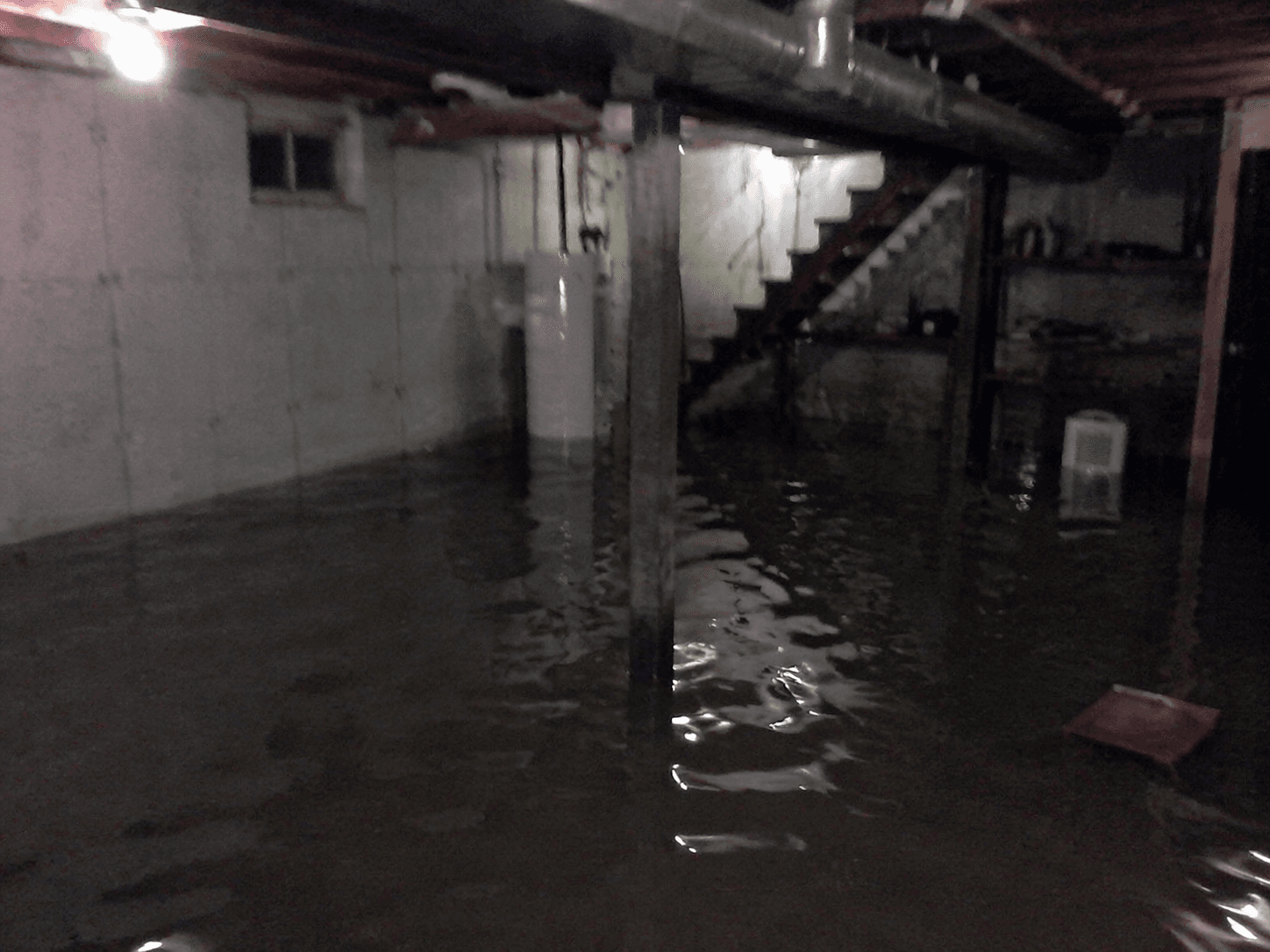
Your basement is flooded. It doesn't matter whether it happened while you were at work, overnight, or during a storm that just passed. What you do in the next few hours will determine how much of this situation is recoverable — and how much becomes a much larger, more expensive problem.
This is a guide built for that moment. Serenity Restoration responds to basement flooding across the greater Atlanta area 24 hours a day. Here is what we tell homeowners when they call.
The First 5 Things to Do When Your Basement Floods (In Order)
Speed matters. The EPA notes that mold can begin growing on wet building materials within 24 to 48 hours. In Atlanta's humidity, that window is often shorter. Do these five things in order.
1. Don't enter standing water until you've cut the power
This is non-negotiable. If there is standing water in your basement and the electrical panel or any outlets are near or below the water line, do not step in until the power is off. Call your utility company if you cannot safely access your breaker panel. Electrocution from flooded basements is a genuine risk.
2. Identify and stop the source
You cannot mitigate a flood that is still happening. Before anything else, determine where the water is coming from:
- Burst or leaking pipe — turn off the main water supply valve immediately
- Appliance failure (water heater, washing machine, sump pump) — disconnect the appliance if safe to do so
- Storm intrusion through a window well, window, or door — you may need to sandbag or block the entry point
- Groundwater seepage through the foundation or floor drain — this requires professional assessment; there is no household fix for active hydrostatic pressure
If you cannot identify the source or cannot stop it safely, call Serenity Restoration at (678) 648-1294 immediately. We will respond and assess.
3. Document before you touch anything
Before you move furniture, start bailing, or drag out wet rugs — take photos and video of everything. Walk the full space. Capture the water level, the affected materials, every visible item that has been damaged. This documentation is critical for your insurance claim, and it is far harder to reconstruct once cleanup begins.
4. Remove what you safely can
Once the source is stopped and the power situation is resolved, begin removing water-damaged items that can be salvaged — electronics, furniture, personal belongings — to a dry area. Do not put wet items outside in Georgia heat if they have any chance of recovery; heat and humidity accelerate mold growth on wet materials.
Do not attempt to use a standard household vacuum to extract standing water. It is not effective and is a safety hazard. Professional water extraction equipment removes hundreds of gallons per hour.
5. Call your insurance company and a restoration company
Report the claim promptly. Most Georgia homeowner policies require timely notice of a loss. Then call a certified water damage restoration company. Waiting for an adjuster before beginning mitigation can void portions of your coverage if additional damage occurs in the interim — and it will occur, within hours.
What NOT to Do — The Common Mistakes That Make It Worse
Don't use fans and think the job is done
Household fans move surface air. They do not dry wall cavities, subfloor systems, or structural framing. A basement that looks and feels dry after a day of fans may have saturated framing, wet insulation behind drywall, and moisture that will not be detected until mold appears weeks later. Professional drying requires industrial air movers, dehumidifiers capable of removing over 120 pints of water per day, and monitoring equipment to verify that structural moisture levels have returned to baseline.
Don't skip the moisture testing
What you cannot see is often more important than what you can. Professional restoration uses thermal imaging cameras and penetrating moisture meters to identify water trapped inside walls, under flooring, and within ceiling assemblies. Without this testing, you cannot confirm that drying is complete.
Don't throw away damaged items before documentation
Insurance adjusters need to see damaged personal property before it is disposed of. Document everything before any disposal, and consult with your insurance company before discarding items that may be covered.
Don't ignore the smell
A musty or earthy smell after a basement flood is not normal residual dampness. It is an early indicator of mold growth. If you smell it, get a professional assessment immediately. At that stage, remediation is still manageable. Once mold colonizes framing and drywall, the scope of work expands significantly.
How Fast Does Basement Flooding Cause Structural Damage and Mold?
The timeline is faster than most homeowners realize:
Within 1–2 hours: Water begins wicking into drywall, subfloor panels, and insulation. Carpet padding absorbs and retains water that surface drying cannot reach.
Within 4–12 hours: Furniture begins to swell, warp, and bleed dye. Laminate and hardwood flooring begin to delaminate and buckle. Drywall begins to soften.
Within 24–48 hours: The CDC notes that mold growth can begin on wet materials within this window. In Georgia's humidity, and particularly in a basement (where natural airflow is limited), mold onset can be faster.
Within 72 hours: Drywall that has been wet for this long typically cannot be dried in place. Removal and replacement becomes necessary. Wood framing that remains wet begins the degradation cycle that, over time, compromises structural integrity.
Beyond 72 hours: Mold growth becomes visible, personal property loss expands significantly, and structural repairs become more likely. Insurance coverage may be affected if the policyholder failed to take mitigation steps.
This is why water damage restoration is a time-critical service. The difference between calling at hour 2 and hour 48 is often the difference between drying in place and a full gut-and-rebuild.
Identifying the Source: Plumbing vs. Groundwater vs. Storm Intrusion
The source of basement flooding determines the repair path and affects your insurance coverage.
Plumbing failures
Burst pipes, failed water heater connections, sump pump failures, and appliance malfunctions are the most common sources of basement flooding in Atlanta. These are generally covered under standard Georgia homeowners policies as sudden and accidental water damage. Our water damage restoration service handles these regularly.
Groundwater and foundation seepage
Hydrostatic pressure from saturated soil after heavy rainfall can push water through foundation walls, floor cracks, or floor drains. This is typically classified as flood damage and is not covered by standard homeowners policies. A separate NFIP flood insurance policy or private flood coverage is required. The Georgia Department of Insurance has consumer resources on flood coverage options.
Storm intrusion through openings
Water entering through a window well that is overwhelmed, a basement door that is not waterproofed, or a window that failed during a storm may be covered under your homeowners policy as a result of the storm event, depending on policy language. Documentation of the storm event and the breach is critical.
If the source is unclear, a professional assessment will identify entry points. This matters for your insurance claim and for determining the correct repair.
What Professional Water Extraction and Drying Actually Involves
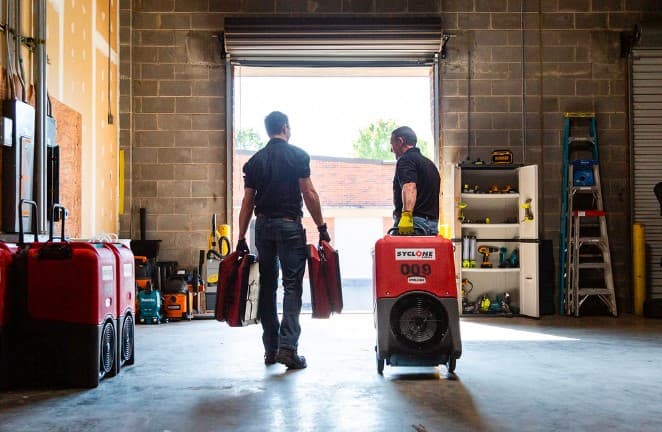
The process Serenity Restoration follows for basement flooding is not simply "pumping out the water." It is a multi-stage drying process designed to return your home's structural components to normal moisture levels — not just surface dryness.
Emergency extraction: Industrial-grade extractors and wet-dry vacuums remove standing water from floors and hard surfaces.
Structural drying: High-capacity air movers create directed airflow across floors, walls, and any open cavity areas to accelerate evaporation from building materials.
Dehumidification: Industrial dehumidifiers — which remove over 120 pints of water per day — control the moisture in the air of the drying zone, preventing reabsorption into structural materials.
Monitoring: Moisture meters and thermo-hygrometers take daily readings of structural components and air conditions to track drying progress and confirm when baseline moisture levels are achieved.
Documentation: Daily moisture readings are logged and provided to the insurance company as part of the claim documentation.
The drying phase typically takes 3 to 5 days for most residential basements, depending on the volume of water, the materials affected, and the severity of structural saturation.
What Does Basement Flooding Restoration Cost in Atlanta?
Costs vary based on the size of the space, the extent of saturation, materials affected, and whether mold remediation or structural repairs are needed.
General ranges for the Atlanta metro:
- Water extraction and drying only (no material removal): $1,500 – $4,000
- Extraction, drying, and partial material removal (drywall, flooring, insulation): $4,000 – $12,000
- Extensive damage with mold remediation and rebuild: $12,000 – $40,000+
If mold has developed, mold removal and remediation is addressed as a separate but coordinated phase. If structural repairs, flooring replacement, or drywall reconstruction are needed, our construction and rebuild service manages that phase.
Get a free inspection — we will assess your specific situation and provide a transparent estimate before any work begins.
Does Homeowners Insurance Cover Basement Flooding?
It depends on the source.
Generally covered: Flooding from plumbing failures, appliance malfunctions, or storm breaches through the building envelope — as long as the damage was sudden and accidental and the homeowner took timely mitigation steps.
Generally not covered: Flooding from groundwater, surface flooding from storms, or sewer backup (which often requires a separate endorsement).
Sewer backup is worth specific attention — it requires an endorsement on most Georgia homeowners policies, and many homeowners do not have it until after they need it.
Serenity Restoration has a licensed adjuster on staff and handles direct insurance billing. We will communicate with your insurer throughout the claims process and help ensure that every covered element of the damage is documented.
Frequently Asked Questions
Can I stay in my home during basement water damage restoration?
In most cases, yes. The drying equipment is loud but not disruptive to daily life on the floors above. If there is significant mold or biohazard contamination, temporary relocation may be recommended.
My basement flooded a week ago and I dried it with fans. Is it fine?
Possibly not. Surface drying does not guarantee structural drying. If you haven't had a professional moisture assessment, there is a meaningful chance that moisture remains in wall cavities, subfloor, or framing. Mold may already be developing. A professional inspection will tell you definitively. Contact us for an assessment.
What if the flooding involved sewage?
Sewage backup is a biohazard situation. It requires different protocols — containment, PPE, antimicrobial treatment, and disposal of contaminated materials. Our biohazard and trauma cleanup service handles sewage backup along with our water damage team.
How quickly can you respond?
We are available 24/7 and dispatch within hours of your call. Emergency response to basement flooding is one of our most common service calls. (678) 648-1294.
Restoring Calm, When It Counts.
When your basement floods, every hour matters. We're ready when you call — day or night.
Available 24/7 · BBB A-Rated · IICRC Certified · Direct Insurance Billing